Progesterone

Finally, a Clear Understanding
of Progesterone

Why this one hormone quietly shapes mood, sleep, fertility, pregnancy,
and long-term health for millions of women.

Guided by over 30 years of clinical experience helping women restore hormonal balance naturally.

What Is Progesterone?

Progesterone is a natural hormone produced primarily after ovulation by the corpus luteum in the ovary. It plays a central role in regulating the menstrual cycle, supporting pregnancy, stabilizing mood, and maintaining overall hormonal balance.
Often referred to as the calming or protective hormone, progesterone works in balance with estrogen. When this balance is disrupted, a wide range of symptoms can begin to appear.
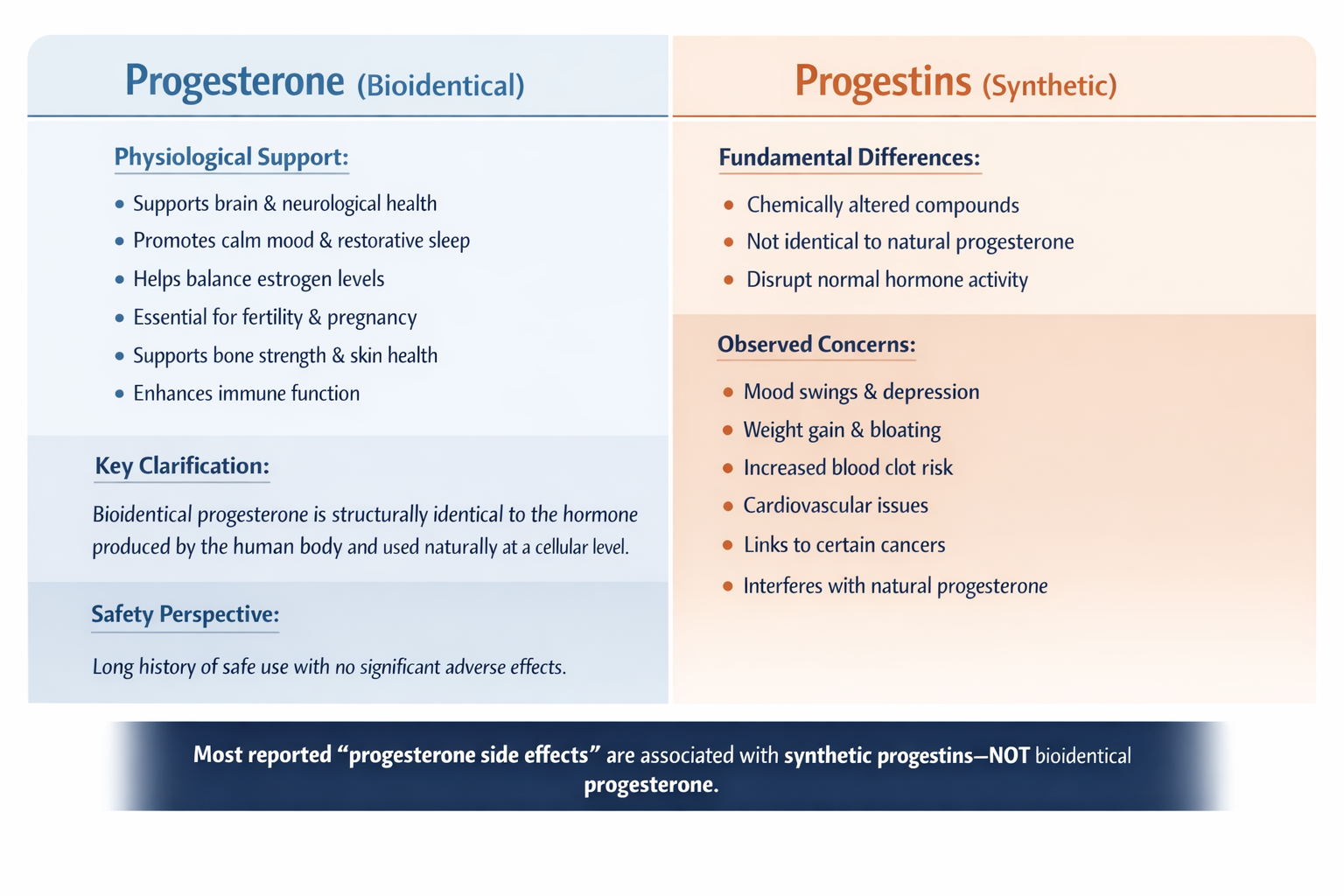
Unlike synthetic hormones, bioidentical progesterone is structurally identical to what the human body produces and is recognized and utilized naturally by the body.

Why Progesterone Matters for Women

Progesterone influences far more than most people realize. It plays a foundational role in multiple systems throughout the body.

Key Functions:

When progesterone levels are sufficient, many women report a sense of balance, emotional stability, and physical ease.

Why Progesterone Levels Decline

Progesterone levels naturally decline over time, but in many women, this decline begins earlier and more abruptly than expected.
Common Contributing Factors:
Because progesterone is only produced after ovulation, any disruption in ovulation directly impacts progesterone levels.

Common Signs of Low Progesterone

When progesterone levels fall below what the body needs, symptoms often begin to appear gradually.
Common Symptoms:
These symptoms are often treated individually, when in many cases they share a common underlying hormonal imbalance.

Natural Progesterone vs Synthetic Progestins

This is one of the most misunderstood areas in women’s health.
Natural progesterone is identical to the hormone produced by the body. It supports normal biological function and is generally well tolerated when used appropriately.

Synthetic progestins, commonly used in conventional medicine, are chemically different. While they are designed to mimic some effects of progesterone, they do not behave the same way in the body.

Understanding this distinction is critical when evaluating hormone-related therapies.

How Topical Progesterone Cream Works

Topical progesterone cream is applied to the skin, where it is absorbed into the underlying tissues and enters circulation.
This method of delivery allows progesterone to be utilized throughout the body without passing first through the digestive system.
Consistent application, appropriate timing, and proper formulation all play an important role in achieving desired results.
Over decades of use, correctly formulated topical progesterone has demonstrated a strong history of safe and effective support for women.


Principles for Effective Use

While each woman’s situation is unique, several general principles consistently apply.
Clear guidance and proper expectations often make the difference between frustration and success.

Research Supporting Progesterone

Progesterone has been studied extensively across multiple areas of women’s health.
Research has explored its role in:
Visit the Research Library to explore over 100 peer-reviewed studies summarized in clear, practical language.

30 Years of Clinical Observation

Since the mid-1990s, progesterone has been at the center of a growing understanding of women’s hormonal health.

Over the past three decades, thousands of women have been guided through restoring hormonal balance using body-identical progesterone and supportive lifestyle changes.

This experience has revealed consistent patterns:
This depth of real-world experience provides a perspective that goes beyond theory and into practical application.

Continue Exploring

Understanding progesterone is the first step.
From here, you can explore how it relates to specific areas of health:

Your Body Already Knows How to Heal

Hormonal balance is not about forcing the body. It is about restoring the conditions that allow it to function as it was designed.

For many women, progesterone plays a central role in that process.

If you are looking for clear answers and a structured path forward, the next step is to better understand your body’s current state.